

Welcome! This free speech community journal was created so the Maple Heights African American community could share videos, photos, events, articles, posts, ideas, thoughts, and information. We're now exclusively on Facebook, so don't forget to also check out our Facebook page. Have a fantastic day!

Showing posts with label JAZZ. Show all posts
Showing posts with label JAZZ. Show all posts
Friday, August 22, 2014

Thursday, July 31, 2014

Friday, July 18, 2014
Wednesday, July 31, 2013

Monday, July 22, 2013
REMEMBERING FOUR GIFTED WOMEN OF COLOR - SISSIERETTA JONES, HAZEL SCOTT, LILLIAN EVANTI, LENA HORNE
NEWSLETTER
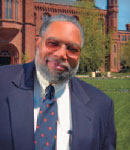
Lonnie Bunch, museum director, historian, lecturer, and author, is proud to present A Page from Our American Story,
a regular on-line series for Museum supporters. It will showcase
individuals and events in the African American experience, placing these
stories in the context of a larger story — our American story.
A Page From Our American Story
Talent knows no color barrier,
so much so that it has often provided African Americans a path to
knocking down racial barriers. In the case of Sissieretta Jones, Lillian
Evanti, Hazel Scott, and Lena Horne, their talent opened doors on stages around the world and paved the way for countless black entertainers to come.
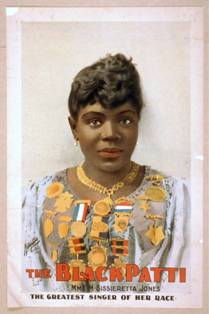
Born in Portsmouth, Virginia, in January 1868, Matilda Sissieretta Joyner Jones began
formally studying music at the Providence Music Academy in Rhode Island
at the age of 14. She is believed to have completed her training some
years later at Boston's renowned New England Conservatory of Music.
With her New York opera debut at
Steinway Hall in 1888, Jones’ talent was quickly recognized. She toured
overseas and became known as the world’s “first Negro prima donna.” Her
voice and striking presence led to comparisons with Italian soprano
Adelina Patti — considered the premier diva of the day. Jones
was nicknamed “Black Patti” — which she resented for obvious reasons —
but as Miss Jones proved to all, a woman of color was capable of giving
world class performances.
Though racism kept her from
performing on America’s most renowned stage, New York's Metropolitan
Opera, she did perform at the White House, and gave a command
performance before England's Royal Family. In June 1892, she became the
first African American to take the stage at Carnegie Hall, and by 1895
she was the highest paid black entertainer in the world. By showing the
world that a black woman could perform classical opera, Jones laid the
ground work for future entertainers, including Lillian Evanti.
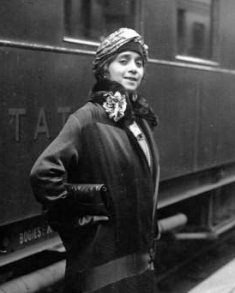
Lillian Evanti was born Lillian Evans on August 12,
1890 in Washington, D.C. She graduated with a music degree from Howard
University in 1907. Thirteen years later she left America for Europe.
There she became the first African American to sing with professional
opera companies in Nice and Paris.
Evanti spoke (and sang in) five languages and critics praised her
commanding coloratura soprano. In the 1930s, Evanti returned to
Washington, D.C. to perform in the city's premier theater, the Belasco,
one of the few major venues that permitted performances before
integrated audiences. The Washington Post called her appearance a “home-coming triumph.”
In 1932, the director of the Metropolitan Opera asked her to
audition. The Opera's board of directors, however, refused to allow
Evanti to join the company, a decision based solely on her race. That,
however, did not prevent her from performing in front of tens of
thousands at Madison Square Garden and other substantial venues. It
would take 23 more years before an African American female, Marian
Anderson, would actually perform at the Metropolitan Opera, thanks in no
small part to the trail blazed by Lillian Evanti.
A gifted musician and performer, Hazel Scott is an American Jazz legend who used her talent to fight against racist stereotypes and attitudes.
Born in Port of Spain, Trinidad on June 11, 1920, Hazel Scott was a
child prodigy. After moving to New York City, Scott was given a special
exemption to enroll in the prestigious Juilliard School of Music when
she was only 8 years old — half the normal enrollment age of 16. By the
time she was in high school she was hosting a radio show on WOR and
performing in the evening.
Before long, Scott was the premier entertainer at New York's Café Society,
the city's first fully integrated club. An accomplished pianist, she
also played trumpet, and saxophone — the latter in a stint with Louis
Armstrong's All Girl Band. She spoke seven languages, appeared in a
handful of movies, and married New York Congressman Adam Clayton Powell,
Jr., a celebrity in his own right.
Scott didn't shy away from fighting for civil rights. Included in her
performance contracts was a clause mandating that the venues be fully
integrated. In addition, she was an outspoken critic of the
stereotypical roles offered to black actresses.
In June 1950, Scott was wrongly linked to communist-leaning
organizations by the House Un-American Activities Committee (HUAC). In
September, Scott voluntarily appeared before the committee. Though she
gave a rousing defense of her patriotism, and no ties to communist
groups were found, the stain of the HUAC damaged her career. By the time
she was able to make a comeback in the early 1960s, jazz’ popularity
had been eclipsed by rhythm and blues, and rock and roll. Jazz critics
and aficionados consider her critically acclaimed 1955 album, Relaxed Piano Moods, one of the most important jazz recordings of the twentieth century.
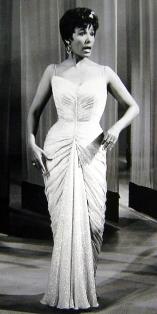
Lena Horne's
life was a remarkably powerful story of the triumph of the spirit. Born
in Brooklyn, New York on June 30, 1917, she became a performer at the
famous Cotton Club at 16. Stardom wasn't far behind. In 1943, her
sultry, moody rendition of Stormy Weather, from the film of the
same name, became her trademark. Horne would win multiple Grammy Awards
for singing, and Tony Awards for her performances on Broadway. By 1945,
her voice, her beauty, and her electric stage presence had made her the
highest paid African American entertainer in the nation.
Throughout her life, Horne stood up for justice. During World War II,
Horne refused to sing for segregated audiences of troops, nor would she
perform when the troops were split with whites in front rows and blacks
in back. On one occasion, disgusted that black GIs were forced to sit
behind German POWs, Horne walked through the audience to where the black
troops were seated and performed with her back to the German prisoners.
It was emblematic of her life.
Horne was outspoken in her call
for equal rights. Her friendships with Paul Robeson, along with W.E.B.
Dubois, landed Horne on Hollywood's blacklist for a period of time — a
list of celebrities and entertainers who were marked by HUAC for alleged
communist ties. Still, her talent was far more powerful than rumors and
innuendo, and she performed in night clubs and toured to sell out
houses. She was recognized as a screen star and her demands — that she
never be cast in the role of maid, for example — put Hollywood on notice
that African American actresses would no longer endure the stereotypes
they had played for decades. When Halle Berry became the first African
American to win the Best Actress Academy Award in 2009, she noted that
her victory was for those women who came before her, including Dorothy
Dandridge and Lena Horne.
It is a tribute to the
indefatigable spirits of these women that they are remembered not only
for their tremendous gifts, but for their determination in the face of a
society that pitted so much against them based solely on their color.
African American actors, singers, and musicians today owe a debt of
gratitude to this group of women for clearing a path toward equality.
|
Monday, April 15, 2013
TRI C JAZZ FEST 2013
|
April 19, 2013 (5:00 PM - 7:00 PM)
Join us for the Tri-C JazzFest opening night party,
“We’re Gonna’ Have a Funky Good Time” at Playhouse
Square in the State Theatre Lobby from 5-7pm celebrating the opening of the
festival.
The event is free and | |
|
| |
 |
April 19, 2013 (8:00 PM - )
A night of soul, stomp and swamp.
Two icons of New Orleans-based jazz, pop and blues, Aaron Neville and Dr. John, share the stage for a Crescent-City celebration. Aaron Neville has lent his trademark vibrato to hit songs with p |
|
| |
 |
April 20, 2013 (2:00 PM - )
“ Pianist Robert Glasper heads down the fraught path of
hip-hop jazz and gets it right. With music this smart and inviting, the implied
diss of mainstream doesn’t feel like sour grapes; it feels like a blueprint
forward.” — Rolling Stone
|
|
| |
 |
April 20, 2013 (4:30 PM - )
Kenny Garrett has become the pre-eminent alto saxophonist of
his generation. From his first gig with the Duke Ellington Orchestra through his
time spent with musicians such as Freddie Hubbard, Woody Shaw Miles Davis and
Art Blakey & The Jazz Mess
|
|
| |
 |
April 20, 2013 (8:00 PM - )
MARC ANTOINE, RICHARD ELLIOT, KEIKO MATSUI, MARION MEADOWS,
PHIL PERRY, BRIAN SIMPSON
Performer/composer Brian Simpson brings together a stellar lineup for an evening of contemporary jazz. Tokyoborn keyboardist Keiko Matsui fuses Eastern, |
|
| |
 |
April 21, 2013 (7:00 PM - )
February 2013 marks what would be the 90th birthday of
Dexter Gordon. Known for a sound as big as his 6’ 6” frame, “Long, tall Dexter”
was one of the most influential tenor players and the first to translate the
language of bebop to the tenor saxopho
|
|
| |
|
April 21, 2013 (9:00 PM - )
February 2013 marks what would be the 90th birthday of
Dexter Gordon. Known for a sound as big as his 6’ 6” frame, “Long, tall Dexter”
was one of the most influential tenor players and the first to translate the
language of bebop to the tenor saxopho
|
|
| |
 |
April 22, 2013 (7:30 PM - )
See the future of jazz with some of today’s most exciting
young artists. With $15 tickets and free parking, these concerts are the best
buy for savvy music fans and newbies alike.
MORE>> |
|
| |
 |
April 23, 2013 (7:30 PM - )
See the future of jazz with some of today’s most exciting
young artists. With $15 tickets and free parking, these concerts are the best
buy for savvy music fans and newbies alike.
|
|
| |

Tri-C JazzFest: Natalie Cole and special guests Clayton-Hamilton Orchestra
One of the most beloved and versatile performers of our era, singer, songwriter and actress Natalie Cole has topped charts in pop, jazz and rhythm & blues through songs of love and connection. The daughter of legendarypianist/vocalist Nat “King” Cole debuted in 1975 with the album Inseparable, featuring the No. 1 hit single “This Will Be (An Everlasting Love).” The album earned Cole two of her nine Grammy Awards. In 1991, she grabbed headlines with a recording of the song “Unforgettable” in which she sang a duet with her late father. The NAACP Image Awards have honored her twice as an Outstanding Jazz Artist and once for her second career as an actress. Natalie Cole will be performing with special guests Clayton-Hamilton Orchestra.
READ MORE |
April 24, 2013 (7:30 PM - )
See the future of jazz with some of today’s most exciting
young artists. With $15 tickets and free parking, these concerts are the best
buy for savvy music fans and newbies alike.
|
Subscribe to:
Posts (Atom)