Welcome! This free speech community journal was created so the Maple Heights African American community could share videos, photos, events, articles, posts, ideas, thoughts, and information.  We're now exclusively on Facebook, so don't forget to also check out our Facebook page.  Have a fantastic day!


Showing posts with label LEGISLATION. Show all posts

Monday, July 7, 2014

SPECIAL MEETING AND PUBLIC HEARING IN MAPLE HTS, MONDAY JULY 7, 2014


Meeting Agenda:
  • 2014-46: Transfer Solid Waste Fund to General Fund – 3rd Reading
  • 2014-47: Retain Solid Waste Fund as is – 3rd Reading
  • 2014-50: 1.3 Mill Additional Levy- Senior Center- to Electors -2nd Reading
  • 2014-52: 1.3 Mill Additional Levy- Senior Center- to Electors -2nd Reading
  • 2014-54: 2014 Amended Appropriations – 1st Reading
  • 2014-55: Tax Budget for 2015 – 1st Reading and Public Hearing
  • 2014-56: Transferring Contingency Fund (102)* to General Fund – 1st Reading
*The Contingency Fund (102) has a balance of $121,000 according to the documents passed out on June 25th.

Tuesday, May 13, 2014

PUBLIC NOTICE: MAPLE HEIGHTS SPECIAL MEETING OF COUNCIL, MAY 14, 2014

Jackie Albers, President of Council has called a special meeting for this Wednesday evening, May 14, 2014 at 6:00pm at the Senior Center.  On the agenda is another reading for the legislation still pending from the last regular meeting and an "Update of the City Status" from the Mayor.


One way you can be kept up to date about meeting in the City is to
follow Maple Heights News on Facebook.   Council meetings can also be viewed on Youtube.
 

Thursday, March 28, 2013

FAIR MINIMUM WAGE ACT


Calling for Passage of a Fair Minimum Wage Act in Cleveland
brown


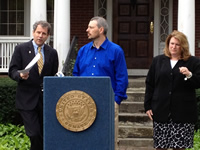
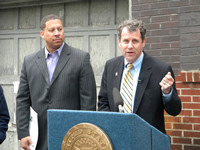
At Brothers Printing in Cleveland this week, U.S. Senator Sherrod Brown called for passage of the Fair Minimum Wage Act, legislation that would raise the federal minimum wage to $10.10 an hour in three steps and provide the first minimum wage increase to tipped employees in more than 20 years.


“Northeast Ohio citizens work hard, play by the rules, and should be able to take care of their families. But too many Ohioans are working harder than ever – and barely getting by,” said Sen. Brown. “Working full-time in a minimum wage job in Ohio pays about $16,000 per year – which isn’t much to live on when you’re trying to put food on the table, fill your gas tank, send your children to school, and provide a safe place for them to live. Ensuring a fair wage is good for middle class families and good for our economy.”


Sen. Brown was joined by Brothers Printing owners Joe and Jay Kaufman, of Cleveland, and Synergistic Systems owner Carlynn Canny, of Willoughby Hills, who explained their reasons for supporting an increase in the Federal minimum wage and called on their competitors to do the same.


“I strongly support raising the minimum wage as proposed,” said Canny. “As a business owner, the value of my company is the work force. Having a strong minimum wage helps everyone, as workers feel better about the company and about their jobs and spend more and contribute to a robust economy. Every person who works hard should earn at least a living wage. In the end, it also costs all of us less, and it is the right thing to do.”


Also joining Sen. Brown was Chris Barksdale, a former social worker, who told his story and recalled the stories of countless others who struggled to survive and support their families on the minimum wage.


“Conscientious people know it is impossible to live on less than $10 an hour in today’s society,” Barksdale said.


Sen. Brown is the cosponsor of the Fair Minimum Wage Act of 2013, legislation that would raise the federal minimum wage. The bill would:


  • Raise the minimum wage to $10.10 an hour from its current $7.25—in three steps of 95 cents—then provide for automatic annual increases linked to changes in the cost of living;

  • Gradually raise the minimum wage for tipped workers—which currently stands at just $2.13 an hour—for the first time in more than 20 years, to 70 percent of the regular minimum wage; and

  • Give more than 30 million American workers a raise under Brown’s bill.

Workers who are paid a minimum wage in Ohio earn only $16,000 per year, which is more than $3,000 below the poverty level for a family of three. The Fair Minimum Wage Act would boost the minimum wage to $21,000, lifting families above the poverty line. According to the National Employment Law Project, the minimum wage has lost more than 30 percent over the last forty years. If the minimum wage had kept up with inflation, it would be worth approximately $10.55 per hour today. Increasing the minimum wage would boost GDP by nearly $33 billion and generate 140,000 new jobs over the course of three years as workers spend their raises in their local businesses and communities.


Monday, March 18, 2013

PROMPT NOTIFICATION OF SHORT SALE ACT

MARCH NEWSLETTER


Speeding up Home Sales
brown


One sure way to reduce the deficit is to strengthen the economy—so more Americans have good-paying jobs and can support themselves and their families rather than relying upon the safety net to make ends meet. We have grown our way out of past recessions through a strong manufacturing sector and a robust housing market. But when empty homes are scattered from Cleveland Heights to Kennedy Heights, we know that the housing market still has a long way to go before it recovers.

Although many prospective home buyers have made legitimate, good-faith offers to purchase a new home, they often encounter banks that ignore or slow walk those offers when sellers owe more on their mortgages than the selling price of these homes. And right now, this is the case for nearly 25 percent of Ohio homeowners.


To help sell these homes and keep our economy moving forward, a short sale often makes sense. Short sales are real estate transactions that must be approved by the bank because the seller owes more on their mortgage than the proposed sale price. Both parties agree to the short sale process because it allows them to avoid a foreclosure – which typically takes longer to complete, involves hefty fees for the bank, and leaves a negative mark on the homeowner’s credit report.


For too many buyers and sellers, the time that it takes to complete a short sale is anything but short. Too often in a short sale, once a buyer makes a written offer and has paid her earnest money deposit, there is a break in communication between the loan servicer and the buyer of the short sale property. The breakdown deprives buyers of knowing whether their offer has been accepted, rejected, or countered – which prevents them from making offers on other homes.

This lapse in communication – especially when big banks are involved – makes it harder for families to move to Ohio. Kathy Hlad discovered this when she put her house, located in Lake County’s Concord Township, on the market in August 2010. Although a buyer submitted an offer on her house, her bank did not respond for eight months. When she finally heard back, the buyer was out of the country for an extended period of time and could not be reached to approve the counter offer. Because more than 30 days elapsed, the deal fell apart and the buyer walked away.

Simply put, homes aren’t being sold – even when there is a demand. Potential buyers – fed up with the waiting game that lasts for months on end – simply walk away. And sellers who may need to move for a new job – either don’t move or take a huge financial hit.

More efficient short sales could make a difference for our economy. If we’re going to recover from the housing crisis, we need to make it easier for qualified candidates to purchase homes.


That’s why I have introduced bipartisan legislation, the Prompt Notification of Short Sale Act, to improve the process for buyers considering a short sale. 


First, the legislation would achieve creating greater accountability for the loan servicer and improved communication between the buyer and loan servicer by requiring a written response of an acceptance, rejection, counter offer, or extension within 30 days of the homeowner’s request. Last year, I met with a group of Ohio community bankers who said they could make a decision on a short sale in less than an hour.  What a million-dollar community bank in Ohio can do in thirty minutes we're asking multi-billion dollar banks to do in 30 days.

And it would help to bolster our housing market and our economy by providing homebuyers with certainty and assurance by giving them a final date at which they can close the transaction, or move on.

This common-sense legislation would help prospective home buyers – and distressed homeowners alike – while helping to rebuild our neighborhoods and fostering long-term economic growth.

This is about stabilizing home values – shoring up our economic future, and standardizing processes that make sense for Ohio families. It’s about ending a waiting game and stopping the delay that represents a dangerous drag on the housing market and our nation’s fiscal health. We cannot afford to wait any longer. Now is the time to stabilize the housing market and stabilize our economy.


Sincerely,

Signature

Sherrod Brown
U.S. Senator