Welcome! This free speech community journal was created so the Maple Heights African American community could share videos, photos, events, articles, posts, ideas, thoughts, and information.  We're now exclusively on Facebook, so don't forget to also check out our Facebook page.  Have a fantastic day!


Showing posts with label SENATOR SHERROD BROWN. Show all posts

Monday, September 23, 2013

SHERROD BROWN NEWSLETTER: ENROLLING FOR A NEW HEALTH PLAN

 Visit My Website


Enrolling for a New Health Plan 


 In less than two weeks, enrollment begins for the health law’s new insurance marketplace, allowing almost one million Ohioans to become eligible for financial assistance to purchase quality, affordable health insurance. 


Starting October 1, Ohioans without insurance, or those who would like to change their insurance plans, can shop for health insurance coverage at www.healthcare.gov


For years, we’ve heard stories of Americans frustrated and failed by our health system. But today, the tide is turning and we are starting to see the health law take effect. 


When this enrollment period begins, more than 916,000 Ohio residents will be eligible for financial assistance to buy insurance that provides quality coverage at a price they can afford. And Ohioans suffering from pre-existing conditions will no longer be denied coverage or charged higher premiums. 
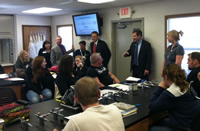


For Ohioans like Robert, a cancer survivor from New Matamoras, the new health law means that insurers cannot turn him away based on his pre-existing condition. For Aaron in Cincinnati, it means not having to choose between tuition and health care. And for Stephen in West Chester, it means being able to feel secure in his retirement.


Health care enrollment marks a milestone for millions of Ohioans – including myself. In 1992, I made a promise that I wouldn’t accept Congressional health insurance until similar coverage was available to all Americans. Today, I can now say that I will be enrolling in the health care marketplace this fall alongside hundreds of thousands of Ohioans.


While the new enrollment period will soon allow all Ohioans to access quality, affordable health coverage, millions of people in our state are already benefiting from provisions in the health care law. 



For example, 97,000 young adults in Ohio are now able to stay on their parents’ insurance until their 26th birthday. We are also closing the ‘donut hole’ for seniors’ prescription drugs – saving Ohio seniors an average of $774 on their medication costs. More than 900,000 Ohioans have received free preventive care, and children are no longer being denied coverage for pre-existing conditions, like asthma, diabetes, and cancer.


For millions across the Buckeye state, the new law will mean less worry and more money in their wallets. And for many Americans, the health insurance marketplace will lower premiums nearly 14 percent more than previously expected.


There is still more work to be done to perfect our nation’s health care system. But on October 1, I will join millions of Ohioans as we take a step towards a future where worry and failed protections will soon become a thing of the past.

Sincerely,

Signature

Sherrod Brown
U.S. Senator


RELATED:

How do I apply for Marketplace coverage? (other choices besides the website)

Tuesday, July 23, 2013

SENATOR SHERROD BROWN ON PREDATORY OVERDRAFT PRACTICES

 FROM HIS NEWSLETTER

Northeast Ohioans were alerted this week to predatory “overdraft” practices by banks that lead customers to overdraw their checking accounts, causing them to be charged exorbitant penalties. U.S. Sen. Sherrod Brown (D-OH), Chair of the Senate Banking Subcommittee on Financial Institutions and Consumer Protection, announced new legislation that would protect Ohioans from these practices.

“Banks should play by the rules instead of purposefully ‘reordering’ their costumers’ debit card transactions so that they profit while consumers rack up costly penalties,” Sen. Brown said. “My bill would put a stop to this by empowering the Consumer Financial Protection Bureau to crack down on banks that employ predatory practices. It also would allow the CFPB to establish fair guidelines to protect consumers and the banks and credit unions that play fair with their customers.”

According to a recent study by the Consumer Financial Protection Bureau (CFPB), some institutions purposefully “reorder” their customers’ debit card transactions in order to maximize their profits at the expense of consumers. Instead of subtracting money from your account in the order that you made purchases for the day, banks will subtract larger purchases first, leading your account to reach zero more quickly, making it more likely that you will be charged multiple times for purchases in the negative. Every time a transaction in the negative occurs, a consumer is charged on average a $34 penalty.

A Federal district court also recently came to the same conclusion—that financial institutions regularly reorder transactions from high-to-low, instead of low-to-high, exclusively to generate more fee revenue at the expense of the consumer. The two plaintiffs in that case incurred $143 in overdraft fees from a $49 overdraft, and $506 in fees for overdrawing $120. According to Pew’s Safe Checking in the Electronic Age Project, transaction reordering caused one plaintiff to incur four overdraft charges instead of just one – imposing an additional $66 in fees.

Reordering is confusing to consumers and has helped contribute to higher fees for the one in every five Americans who will overdraw their checking account this year. Specifically, Brown’s bill would crack down on these practices by:
  • Ensuring banks post transactions in an objective way that is clear to their customers;
  • Giving the CFPB, headed by the newly-confirmed Richard Cordray, the authority to monitor banks’ overdrafting practices to deem if they are acting predatorily; and
  • Establishing fair guidelines to protect consumers now and in the future.
“Pew applauds Sen. Brown’s bill as it marks a turning point in the safety and transparency of the checking account as a household financial management tool,” said Susan Weinstock, director of Pew’s safe checking work. “For too long, financial institutions have been allowed to change the order that deposits and withdrawals are processed. This Act would restore safety to these accounts by preventing financial institutions from posting transactions in a way that maximizes overdraft fees.”

Sen. Brown’s bill would also direct the CFPB to provide a safe harbor from litigation for banks that play by the rules and follow the system the agency puts in place to ensure fair overdraft practices.

Joining Sen. Brown to help draw attention to these abuses was Francis Lesniak, a Northeast Ohio woman who overdrew her account by a total of only $5.60, but was charged $96 in penalties because her transactions were reordered.

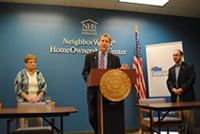
They were also joined by David Rothstein, Project Director for Asset Building at Cleveland Saves, a program dedicated to helping Northeast Ohioans build their savings. Rothstein is also currently the Director of Resource Development and Public Affairs at the Neighborhood Housing Services (NHS) of Greater Cleveland and previously studied consumer issues and banking for Policy Matters Ohio.

“Overdraft fees hit working families and seniors hard,” Mr. Rothstein said. “We are working with clients through financial capability training to help them budget and through our financial partners to find them the best products but overdraft fees are expensive, inconsistent, and jarring to a monthly budget. This Bill provides a sensible floor for overdraft policies.”

Sen. Brown chairs the Senate Banking Subcommittee on Financial Institutions and Consumer Protection and has long fought to protect Ohioans from abusive and predatory banking practices.

Sunday, June 2, 2013

SHERROD BROWN ANNOUNCES PLAN TO DETER THEFT OF CELL PHONES BY PREVENTING THE ILLEGAL RESALE OF STOLEN PHONES

From Senator Sherrod Brown's Newsletter

 Visit My Website

With cell phone theft on the rise – endangering Ohioans and consuming critical police department resources and time – U.S. Sen. Sherrod Brown

brown 

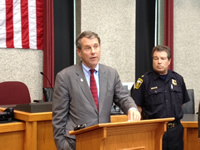
announced a plan to deter theft by preventing the illegal resale of stolen phones. He was joined by Euclid City Chief of Police Tom Brickman, Public Information Officer Sgt. Mitch Houser, as well as Dennis Kashi, a Northeast Ohio resident whose phone was stolen and has also spent years working in the cell phone industry with numerous victims of cell phone theft.


“Too many Northeastern Ohioans have been targeted for crime, just because of the phone in their pocket or purse,” Sen. Brown said. “With so much of this criminal activity fueled by the black market, this legislation will crack down on cell phone theft and impose severe consequences on thieves who will think twice before trying to make a quick buck.”
 

As of last year, about 87 percent of Americans own a cell phone – about 45 percent are smart phones, according to the Pew Research Center. A stolen iPhone can cost up to $849.00 to replace.


Criminals often target cell phones because they can easily be resold on the black market. Prior to the establishment of the database, most carriers only deactivated a stolen cell phone’s SIM card rather than the entire phone. While carriers entered into an agreement with Federal Communications Commission (FCC) to launch a database of unique cell phone identification numbers to allow stolen cell phones to be entirely deactivated, some criminals are tampering with those unique identifiers – known as International Mobile Equipment Identity (IMEI) numbers – to avoid detection.


“The sheer number of thefts and complexity of the associated investigations have made it difficult for detectives to thoroughly investigate many of these incidents,” Officer Houser said. “A different, comprehensive approach is needed to effectively deal with this problem. Working to eliminate the market for stolen cell phones will be a major step in reducing cell phone theft and relieving the associated strain on local law enforcement resources.”


The Mobile Device Theft Deterrence Act of 2013 would impose criminal penalties of up to five years for criminals who tamper with cell phone IMEIs in order to circumvent the database. The bill would provide exceptions for legal alterations made to repair or refurbish phones or to protect the privacy and security of the end user. The bill has the full support of CTIA, the Wireless Association, which joined forces with the FCC to implement the national database.


“Personally, I have been a victim of cell phone theft twice in my life,” Mr. Kashi said. “Throughout my many years as a cell phone representative, I have seen numerous cases where someone's phone was stolen. No matter how many times this has happened, or however the problem arose, the feelings and emotions the victim experiences are devastating. The bill that Senator Brown is introducing is not only important on a criminal front, but it's imperative to protect the everyday person.” 


Related:
May 30, 2013 The Hill:  Sen. Brown announces bill aimed to stop the resale of stolen phones


May 14, 2013 CTIA-The Wireless Association® Statement on the Mobile Device Theft Deterrence Act

Friday, March 1, 2013

SHERROD BROWN - TAX TIPS FOR OHIO FAMILIES


SHERROD BROWN NEWSLETTER - MARCH 1, 2013


Tax Tips for Ohio Families
brown


With April 15th just around the corner, millions of Ohioans are beginning to file their federal income taxes. Before you get to work on your returns, Sen. Sherrod Brown (D-OH) has a few tips on the resources available to help Ohio tax filers.

Get forms and booklets. All IRS forms and instructions, along with FAQs and Tax Tips, are available through the IRS website. In addition, the most common forms are available at most local libraries, post offices, and military installations. If you need a paper copy of any form or booklet, you can also place an order with the IRS by calling 1-800-TAX-FORM (800-829-3676).

Get help filing your taxes. If you earn $51,000 per year or less, you could be eligible for free tax assistance through the Volunteer Income Tax Assistance (VITA) program. VITA connects you with an IRS-certified tax assistant in your community to help you file your return and make sure that you take advantage of the many tax credits available to help working families.

If you are 60 or older, you could also be eligible for tax assistance through the Tax Counseling for the Elderly (TCE) Program, which offers free assistance to seniors. TCE assistants are IRS-certified and specialize in pension and retirement issues to better assist senior taxpayers.

To locate the nearest VITA or TCE site, click here.

File online for free. If your adjusted gross income (AGI) was less than $57,000, you’re eligible to use brand-name tax software at no cost through the IRS Free File online system. All taxpayers are eligible to file their taxes for free through the IRS Free File Fillable Forms. To file online, click here.

Remember credits for working individuals and families. Low- and middle-income working families and individuals can keep more of the money they earned throughout the year by claiming the Earned Income Tax Credit (EITC), but many Ohioans don’t take advantage of the credit because they don’t know it exists or don’t think they’re eligible. Last year, one in five people who were eligible for the EITC did not claim it, costing them hundreds or thousands of dollars. Eligibility is determined by income and ranges from $14,340 to $51,567, depending on your family size. If you qualify, you could receive a tax deduction or refund. To find out if you qualify, click here.

Families with children can also claim the Child Tax Credit (CTC), which can help families save up to $1,000 per dependent child under age 17. To find out if you qualify, click here.

Get help with college costs. On January 1, 2013, Congress extended a tax credit to help make higher education affordable for students and parents. The American Opportunity Tax Credit (AOTC) allows low- and middle-income students or parents to deduct up to $2,500 from their tax bill or to receive a refund of to $1,000 per student. There has been a delay in processing for AOTC claims for the 2013 tax season, but taxpayers can now begin filing forms that include the AOTC. For more information, click here.

Get credits for child and dependent care. Many parents who work or are looking for work must pay for child care. If you paid someone for care of a child under 13 or for care of a dependent this year, you could qualify for a tax credit. For more information, click here.

Get your tax return faster. While tax refunds can be distributed as a check, you will receive your refund more quickly if you have your refund deposited directly to your bank account. Direct deposit keeps your refund safe and will ensure that you claim your refund as quickly as possible.

You can also choose to save your refund for yourself or a family member by purchasing up to $5,000 in Savings Bonds. Savings Bonds are a safe way to save for future retirement, education costs, or special events without needing a bank account. For more information on direct deposit or putting your refund into a Savings Bond, click here.

Tuesday, February 26, 2013

450 JOBS RETURNING TO FORD'S CLEVELAND ENGINE PLANT


Visit My Website


450 Jobs Returning to Cleveland’s Engine Plant
brown


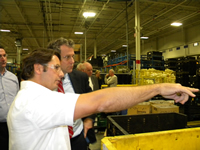
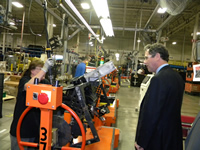
Ford Motor Company announced last week that it will invest nearly $200 million and add 450 new reshored jobs at its Cleveland Engine Plant which produces the 2.0-liter EcoBoost. U.S. Senator Sherrod Brown praised the nearly $200 million investment, which will officially move production of the 2.0-liter EcoBoost engine for North American vehicles from Valencia, Spain to Cleveland, Ohio.


The demand for the EcoBoost is a testament to the strength of Northeast Ohio manufacturing and our auto supply chain,” said Sen. Brown. “Ford’s expansion not only boosts jobs and the economy in our state, but proves that you should always bet on the American worker.”


Sen. Brown has long been a champion of American manufacturing and Ohio’s auto industry. In 2008 he introduced the Auto Industry Emergency Bridge Loan Act, with a bipartisan group of colleagues and also fought to ensure that funds from the Troubled Asset Relief Program (TARP) were allocated to aid the Big 3 and American auto suppliers. At the start of 2009, Sen. Brown applauded President Obama’s decision to advance restructuring plans to ensure the viability of the American auto industry.


He also was a strong supporter of the Cash for Clunkers program, in which the federal government provided Ohio consumers with vouchers to purchase new fuel-efficient vehicles. The program was a resounding success, helping American consumers purchase nearly 700,000 new vehicles—adding nearly one percent to the third-quarter GDP growth at the time. The program stabilized the auto sector and saved or created thousands of jobs across Ohio and the nation.


According to a 2010 study by the Center for Automotive Research, more than 848,000 Ohio jobs depend on the auto industry; this figure includes 120,285 direct employment (people employed directly by auto industry: 39,685 by automakers and 80,600 by parts suppliers); 276,330 indirect employment (jobs indirectly employed by automakers or parts suppliers: 167,891 by automakers and 108,439 by parts suppliers); and 395,981 spin-off employment (expenditure-induced employment resulting from spending by direct and intermediate employees; 221,018 by automakers and 174,963 by suppliers). A 2011 study by the Center for Automotive Research found that 164,654 jobs in 2009 would have been lost in Ohio if the auto industry had not been rescued.


Saturday, February 23, 2013

HEALTHCARE LAW HELPS SENIORS SAVE ON DRUG COSTS AND PREVENTIVE CARE


SHERROD BROWN NEWSLETTER :


Healthcare Law Helps Seniors Save on Drug Costs
 
brown


Seniors have saved millions of dollars on prescription drugs as a result of the health care law – the Affordable Care Act (ACA). This law has enabled Ohioans in the so-called “donut hole” – the period of time when private Medicare insurance no longer covers prescription drugs – to save millions on prescription drug costs. Prior to the health law, the donut hole left seniors with huge out-of-pocket costs that may cause them to have to choose between medicine and food. Over the past three years, the added coverage for seniors as a result of the health law has saved Americans $5.7 billion nationwide.


Ohio’s seniors have worked hard, paid into Medicare, and deserve health care options that truly meet their needs,” Brown said. “Under the health law, coverage for our seniors continues to improve.” 


The new health law has also helped put money back in patients’ pockets. In 2010, thanks to the health law, Ohio seniors who hit the coverage gap “donut hole” received a one-time $250 rebate. In 2011, Medicare recipients began receiving a 50 percent discount on covered brand name drugs. Seniors in the “donut hole” also saw additional coverage of generic drugs costs. Coverage for both brand name and generic drugs in the gap will continue to increase until 2020, when the coverage gap will be eliminated. Ohio seniors have saved over $278.7 million on prescription drugs since the passage of the health law with an average per beneficiary savings of $774.
 
These added benefits have helped guarantee that seniors and people with disabilities receive the medicine and care they deserve after years of hard work. Covering the Medicare “donut hole” is just one of the many ways the health law is benefitting Ohioans.


Also thanks to the health law, seniors have access to free preventive services. These services include cancer screenings, such as colonoscopies and mammograms, and an annual wellness visit. Because cost barriers have been removed, more than 903,000 Ohioans with traditional Medicare took advantage of at least one preventive service in 2012. Because of Medicare, nearly 98 percent of seniors have health coverage and more than 90 percent live above the poverty line.


Senator Brown will continue to make sure Ohioans – especially seniors – receive the health care they deserve.


Tuesday, February 19, 2013

SHERROD BROWN HELPING OHIO WORKERS

Newsletter from Sherrod Brown


At the President’s State of the Union address, I was joined by Cookie Hall, a second-generation Cleveland steelworker who knows from experience that American workers are the most productive in the world. Cookie works at Cleveland Works, a steel plant owned by ArcelorMittal North America. Workers at this plant produce one ton of steel per each man hour of work – making it the most efficient steel plant in the world. There is no disputing that our workers are the most productive in the world, but there are steps we must take to make them the most innovative.


In his speech, President Obama echoed my call for the creation of a National Network of Manufacturing Innovation (NNMI). Using Youngstown’s first-of-its-kind manufacturing innovation institute as a model, the President announced the launch of three more manufacturing hubs and called on Congress to help him create a network of 15 additional centers. Every region and every state has a role to play in helping maintain our innovative edge and these new hubs will help.

I’ve been working with small businesses, industry leaders, universities, and research institutions on legislation to create these important NNMI institutes. This network will retain U.S. leadership in a range of next-generation technologies, capitalize on our investment in basic research, and create thousands of high pay, high tech manufacturing jobs. By leveraging existing infrastructure and pockets of innovation across the country, NNMI provides small businesses with access to the tools and expertise needed to compete in the global economy. This will create regional magnets for cutting-edge research, talented students, and additional investments.

And we’ve already started to bring people and organizations together to spur 21st century innovation. Last year, we were able to bring the first-of-its-kind National Additive Manufacturing Innovation Institute (NAMII) to the Mahoning Valley – to the “Tech Belt” that extends from Cleveland to Pittsburgh. NAMII is a $70 million public-private partnership that can make Youngstown a world leader in new manufacturing technology – like 3-D printing. As the President mentioned in his address, “A once shuttered warehouse [in Youngstown] is now a state of the art lab where new workers are mastering the 3-D printing that has the potential to revolutionize the way we make almost everything.”

Collaboration is critical for our success – and an NNMI would provide small businesses and research institutions access to the tools and expertise needed to compete in the global economy. And it can also spur the creation of regional hubs of advanced manufacturing throughout the U.S.

American workers have the drive, the creative thinking, and the determination to out-innovate the rest of the world. We just need to make certain that they have the opportunity to do so.

Sincerely,


Wednesday, December 19, 2012

SHERROD BROWN DOES THE RIGHT THING

I don't think Sherrod Brown would mind my sharing his letter to me.  I'm so thankful that Sherrod Brown was re-elected to the Senate.  He  is an excellent example of the kind of public servant we want to represent us.
 
 
"Dear Elaine:
 
Thank you for getting in touch with me about the salaries and benefits provided to lawmakers and federal workers.
 
 
During these tough economic times, working families are making their own difficult decisions on how to reduce their personal budgets. With this in mind, it is clear that the government must lead by example and share in the sacrifices required to reduce its budget.
 
 
In December 2010, President Obama introduced a plan to freeze salaries for federal civilian workers for two years. According to projections, the proposal saved the federal government $5 billion.


In addition, with the understanding that lawmakers should not be receiving a raise as working families are struggling to make ends meet, I am a cosponsor of legislation that would prevent members of Congress from receiving an automatic pay raise. This bill would reduce spending by $80 million over the next decade. Lawmakers have not received a cost-of-living adjustment for three years.
 
 
Furthermore, with some in Congress considering substantial changes to Social Security, there is no reason that lawmakers should be exempt from the same reforms that could cause financial hardship for the middle class. I am proud to have introduced the Congressional Retirement Age Act, which would amend federal employee pension laws so that members of Congress can no longer receive their federal pensions before individuals can receive their Social Security retirement benefits.
 
 
Lastly, when I first came to Congress, I refused participate in the Federal Employees Health Benefits Program because too many Americans had no health coverage at all. Only after Congress passed health reform legislation in 2010 — which provides Americans the same type of insurance options that members of Congress currently receive — have I opted to participate in the Congressional health plan.
 
 
As the Senate considers legislation that would cut salaries or benefits for federal workers and lawmakers, I will be sure to keep your views in mind. Thank you again for getting in touch with me.
 
 
Sincerely,
         
Sherrod Brown
United States Senator"