
Welcome! This free speech community journal was created so the Maple Heights African American community could share videos, photos, events, articles, posts, ideas, thoughts, and information. We're now exclusively on Facebook, so don't forget to also check out our Facebook page. Have a fantastic day!

Showing posts with label SCLC. Show all posts
Showing posts with label SCLC. Show all posts
Friday, January 16, 2015

Saturday, March 29, 2014
NEWSLETTER: CHILDREN'S DEFENSE FUND: ELLA BAKER: MY CIVIL RIGHTS GENERATION'S "FUNDI"

Until the killing of Black men, Black mothers’ sons, becomes as important to the rest of the country as the killing of a White mother’s son—we who believe in freedom cannot rest until this happens.
--Ella Baker
--Ella Baker
During this last week of Women’s History Month I wanted you to learn about Ella Baker, a transforming but too little known woman and overpowering justice warrior for my generation of civil rights activists. The quote above is from Ella Baker 50 years ago, and like so much about this visionary civil rights leader it is still just as relevant today. She was talking about the murders of civil rights movement workers James Chaney, Andrew Goodman, and Michael Schwerner, who disappeared together in Mississippi in June 1964, and reacting to the fact that searchers sent to comb local rivers and swamps to find the bodies of Chaney, who was Black, and Goodman and Schwerner, who were White, also found the bodies of other missing Black men for whom authorities had not bothered to search. Ella Baker was an outspoken warrior against injustice and inequality her entire life, and always, always unwilling to rest. Her words continue to be a rallying cry for all of us who believe our nation still does not see and value Black and White children’s lives the same way.
Sweet Honey in the Rock’s Bernice Johnson Reagon featured these words in the stirring “Ella’s Song.” She was one of hundreds of young people Ella Baker mentored during the civil rights movement. I was one of them who first met Mrs. Baker during my senior year at Spelman College in Atlanta. She was a staff member of the Southern Christian Leadership Conference (SCLC) and was often a powerful behind-the-scenes advisor to close colleagues like Dr. Martin Luther King, Jr. Ella Baker believed in servant leadership and shared leadership rather than charismatic leadership and encouraged young people like me to find and lift our own voices and join them with others. She was instrumental in founding the Student Nonviolent Coordinating Committee (SNCC) and fought to make sure we retained our own independent organization as students rather than simply becoming the youth arm of the Dr. King-led SCLC. Julian Bond, Diane Nash, Bob Moses, and many other fellow student activists and young activists were all influenced by her example, counsel and convening and share a special debt of reverence and gratitude. Ella Baker was tough and disciplined and demanded the best of the young and older adults around her. She understood that movement building was about more than protests and meetings and speeches—it was hard, daily, persistent, and sacrificial behind-the-scenes work. She was an institution builder and stressed the importance of strong institutions that could last over time rather than reliance on a single strong leader.
Ella Baker was born in 1903 in Norfolk, Virginia. She had a strict mother, a warm and caring father, and a large extended family of grandparents, uncles, and aunts who shared what they had with the poor. She was a fighter and as a child beat up White children who called her names. Since there was no schooling for Black children beyond elementary years in her area, she went off to boarding school at Shaw University in Raleigh, North Carolina, and was valedictorian of her high school and college graduating classes. She moved to Harlem, got caught up in its excitement, and went everywhere to hear lectures and speeches and read in libraries to learn everything she could. After working as a domestic and as a waitress, she got a job with the Negro National News published by George Schuyler who later recommended her for a job at the NAACP. She rapidly rose through NAACP ranks. “Wherever she went,” her biographer and friend Joanne Grant wrote in Ella Baker: Freedom Bound, “she created a whirlwind, leaving a scatter of papers, notes, leaflets, church programs, and phone numbers in her wake. . . She never let up her struggle to increase the role of the rank and file.”
Ella Baker pushed for organizational structure and rules in the NAACP just as she did later at SCLC and SNCC. Ella Baker was the one who sat down with Bayard Rustin and Stanley Levinson to discuss how to create a continuing movement out of the Montgomery bus boycott, which led to SCLC’s formation. As the first staff member hired for SCLC, it was Ella Baker who tried to put the new organization in operating order so that Dr. King was not just a leader who reacted to and jumped from one event to the next. She worked to give SCLC the capacity to plan and implement action. And Ella Baker convinced Dr. King to bring me and about 200 other Black college students who had been arrested for engaging in sit-in protests to open up lunch counters around the South to a meeting at her alma mater, Shaw University. My first plane ride ever was from Atlanta to Raleigh for that meeting. SNCC was the meeting’s result.
Ella Baker was fully aware of but unintimidated by the men she worked with who devalued the advice of women and sometimes resented her forcefulness, prodding, and “mothering.” She made no special effort to be ingratiating. She labored at SCLC as she had at the NAACP to raise money, conduct voter registration drives, speak to citizens groups (sometimes ten times a day), and travel to community after community to help people help themselves. She warned against SCLC becoming “a cult of personality” for Dr. King rather than a means of empowering others, and she eventually left SCLC after deciding that movement building was more important than the specific organization and personalities involved—another of her lessons that is so relevant today.
At a gathering celebrating Ella Baker’s seventy-fifth birthday, Bob Moses called her the “Fundi,” the person in the community who masters a craft with the help of the community and teaches it to other people. Fundi became the title of a film on her extraordinary life and work. Ella Baker died in 1986 on her 83rd birthday. I remember her counsel as I think about sustaining and strengthening the Children's Defense Fund’s mission today and future tomorrow for the long haul struggle to create and maintain a level playing field for every child. I learned from her the crucial importance of training a successor generation of young servant-leaders which has been a strong priority of CDF’s since its inception. Policies are no better than the people who are implementing them and their commitment to just treatment of children and the poor. I am so proud that over 13,000 college students have gone through training at CDF’s Ella Baker Child Policy Institute at the former Alex Haley Farm, that more than 113,000 children have gone through the CDF Freedom Schools® program with a sense of commitment to something beyond themselves, and that many CDF alumni are doing wonderful public service across the country. This is one way CDF honors her legacy along with other great unsung women justice warriors like Fannie Lou Hamer, Unita Blackwell, and Septima Clark who too few ever hear of but we all owe a great debt of gratitude.
We also all honor Ella Baker by keeping her belief in freedom and equality alive until it becomes reality for every mother’s child. In a nation where Black children are more than three times as likely to be poor as White children; where Black babies are more than twice as likely as White babies to die before their first birthdays and Black children are twice as likely to die before their 18th birthdays as White children; where more than 80 percent of fourth and eighth grade Black public school students cannot read or compute at grade level and Black children are more than twice as likely to drop out as White children; where gun violence is the leading cause of death among Black children ages 1-19 and Black children and teens are nearly five times more likely to die from gun violence than White children and teens; and where Black mothers’ sons can be seen and treated as lethal threats for wearing hoodies in the rain or refusing to turn their car radios down, we who believe in freedom still cannot rest.
Marian Wright Edelman is President of the Children's Defense Fund whose Leave No Child Behind® mission is to ensure every child a Healthy Start, a Head Start, a Fair Start, a Safe Start and a Moral Start in life and successful passage to adulthood with the help of caring families and communities. For more information go to www.childrensdefense.org.
Friday, September 14, 2012
16TH STREET BAPTIST CHURCH BOMBING IN BIRMINGHAM
This is a newsletter that was emailed today from the National Museum of African American History and Culture:
Lonnie
Bunch, museum director, historian, lecturer, and author, is proud to present
A Page from Our American Story, a
regular on-line series for Museum supporters. It will showcase individuals and
events in the African American experience, placing these stories in the context
of a larger story — our American story.
A
Page From Our American Story
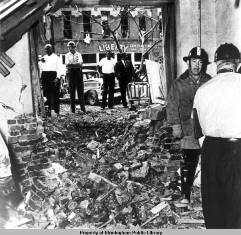
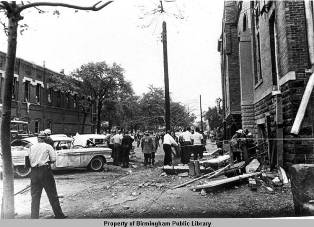
On September 15, 1963, an explosion shattered the quiet of a Sunday morning,
blowing apart the 16th Street Baptist Church in Birmingham, Alabama.
Four young girls who were getting ready for Sunday School were killed almost
instantly.
Denise McNair, 11, Addie Mae Collins, 14, Carole Robertson, 14, and Cynthia
Wesley, 14 died as a result of a bomb placed under the church by members of the
Ku Klux Klan. Twenty-two others, including Collins' younger sister Sarah, were
injured.
“I remember Denise asking Addie to tie her belt,” Sarah Collins Cox said in
an interview. “And then it happened.”
Most Americans had little idea, or had paid little attention to the fact that
Birmingham had been the scene of more than 50 bombings between 1947 and 1963.
This bombing, however, would not go unnoticed. The murderous event
awakened the nation and effectively galvanized the civil rights
movement.
In the months leading up to the bombing, Birmingham had become the focal
point of the civil rights front. The city was all too familiar with racial
violence. Both African Americans and moderate whites had been long terrorized by
the Klan.
.
Years earlier, Birmingham minister Fred L. Shuttlesworth founded the Alabama Christian Movement for Human Rights (ACMHR) to directly confront racism and segregation in the city. In the spring of 1963, Shuttlesworth's group joined forces with Dr. Martin Luther King, Jr., and his Southern Christian Leadership Conference (SCLC), the largest and best known organization fighting for equal rights at the time. Together, the men formulated a plan that called for months-long protests to end segregation in Birmingham
In May of that year, after weeks of marches, sit-ins, boycotts, bus strikes,
and prayer vigils, an agreement was reached. It had the input of local
government leaders, white business owners, African American leaders and civil
rights groups. The city would actively begin working toward integration. The
agreement did not sit well with segregationists, among the most violent of which
was the notorious KKK.
Riots erupted during the summer months, and nightly newscasts revealed to the
rest of America the lengths to which Southern racists like Governor George
Wallace and Birmingham's Commissioner of Public Safety Eugene “Bull” Conner
would go in their fight to keep the South segregated.
Conner ran Birmingham's police and fire departments, and his ruthless tactics
against the demonstrators shocked the country. With each evening's news,
Americans watched as Conner's police used attack dogs, billy clubs, and tear gas
on the peaceful protestors. He turned fire hoses on the crowd with water
pressure so high it would “peel away skin,” according to press
reports.
Still, it was the 16th Street Baptist Church and the deaths of
four innocent children that finally snapped the nation and the federal
government into action. All over the country, citizens became angry and ready
for change. In June 1963, President John Kennedy introduced a civil rights bill,
now known as the 1964 Civil Rights Act, to widespread support.
The 16th Street Baptist Church bombing is cited by many historians
as the turning point in the civil rights movement. An editorial in the Milwaukee
Sentinel said the bombing should “serve to goad the conscience” of the country.
“The deaths...in a sense are on the hands of each of us.”
We should always keep in mind that the four girls who died, while
immortalized in history, were children with children's dreams. Carol Robertson
was a straight A student who loved to dance. Cynthia Wesley excelled in math.
Addie Mae Collins was quiet, athletic, and had a flare for art. Denise McNair
wrote plays for the kids in her neighborhood.
History is not scripted. In the case of the 16th Street Baptist
Church bombing it was shaped out of racist hatred that ended four innocent
lives, but changed America forever.
|



Subscribe to:
Posts (Atom)