Welcome! This free speech community journal was created so the Maple Heights African American community could share videos, photos, events, articles, posts, ideas, thoughts, and information.  We're now exclusively on Facebook, so don't forget to also check out our Facebook page.  Have a fantastic day!


Showing posts with label NMAAHC. Show all posts

Sunday, December 1, 2013

LONNIE BUNCH NMAAHC MUSEUM DIRECTOR ON "60 MINUTES" DECEMBER 1, 2013

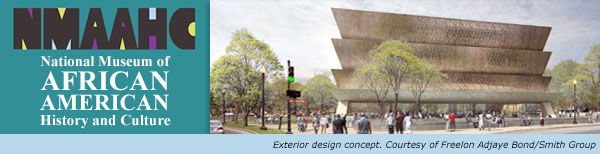
NMAAHC -- National Museum of African American History and Culture


Lonnie Bunch
Lonnie Bunch
Director


Hello Charter Members and Friends of the NMAAHC,


We hope that you have enjoyed a Happy Thanksgiving holiday with family and friends!


Also, we would like to remind you, our valued Charter Members and supporters, that Lonnie Bunch, museum director, will appear on CBS News’ 60 Minutes tonight, December 1st at 7:00PM ET (around 7:30pm if the football game is still on). Lonnie was interviewed by Scott Pelley for a feature on the 150th anniversary of the Capitol Dome and its upcoming restoration. His interview helps tell the story of African Americans’ contributions to the building of our nation’s capital, the dome, and Philip Reid, the enslaved man who helped raise the Statue of Freedom at the top.


Thank you!

Edison R. Wato, Jr.
Membership Program Manager
Smithsonian Institution
National Museum of African American History and Culture

----------------------------------------------------------------------------------------------


FOLLOW - UP

Lonnie Bunch spoke about the master craftsman and artisan, Philip Reid

Wednesday, April 17, 2013

NATIONAL MUSEUM OF AFRICAN AMERICAN HISTORY AND CULTURE UNDER CONSTRUCTION


CLICK HERE TO VIEW VIDEO

Here's your chance to look into the future! Click on this link to find a very special video I hope you will view.


The video connects you to an exciting two-and-a-half minute computer animation — known as a “fly-through” — that takes you through a conceptual rendering of Smithsonian's National Museum of African American History and Culture.


The video dramatically depicts what your support is helping to create. It is a vision that you can truly be proud of!


Beginning with a montage of African American history makers, the video flies over our beautiful National Mall in Washington, D.C. You’ll see the Museum itself taking virtual shape at 14th Street and Constitution Avenue NW, right across from the Smithsonian's American History Museum. Then you’ll go inside for a “guided tour” of galleries, exhibitions and more, ending with a view of the building glowing with lights at night.


What makes this video so exciting is the knowledge that, thanks to you and your fellow Charter Members and Supporters, the museum building is rapidly becoming a reality. Construction is underway and our doors will open in late 2015!


You are playing a tremendous role in building the National Museum of African American History and Culture already. I offer the heartfelt gratitude to you from all of us here at the Museum.


Lonnie G. Bunch All the best,
Bunch sig
Lonnie G. Bunch
Director
 

P.S. I hope you’ll forward this message to friends and family who need to know that, finally, African American history and culture will be getting a much deserved and long overdue place of honor on the National Mall in Washington, D.C. Again, thank you!

Wednesday, March 20, 2013

NATIONAL MUSEUM OF AFRICAN AMERICAN HISTORY AND CULTURE PROGRAMS MARCH AND MAY 2013

NMAAHC -- National Museum of African American History and Culture

NMAAHC public programs in March and May 2013

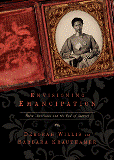
Envisioning Emancipation: Black Americans and the End of Slavery, A Conversation between Deborah Willis and Lonnie Bunch
Deborah Willis Envisioning-Emancipation_sm.gif
Monday, March 25, 2013, 7:00 pm
National Museum of American History, Warner Bros. Theater14th Street and Constitution Avenue, NW
Washington, DC
First floor, enter through Constitution Ave doors
Metro: Smithsonian or Federal Triangle


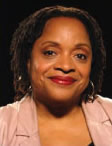
Lonnie Bunch, founding director of the National Museum of African American History and Culture, will moderate a discussion with Deborah Willis, chair of the Department of Photography & Imaging at the Tisch School of the Arts at New York University, about her latest work Envisioning Emancipation: Black Americans and the End of Slavery. The publication is a collaboration with Barbara Krauthamer, professor of history at the University of Massachusetts, Amherst. Through rare photographs and documents, the book focuses on black enslavement, emancipation and life from 1850 to1930. Recipient of Guggenheim, Fletcher and MacArthur fellowships, Willis is a founding member of the museum’s Scholarly Advisory Committee.


Books will be available for sale and signing following the program.
For more information, visit http://go.si.edu/site/R?i=cqTTSrOnEfQGXqDVZZQN8A or call (202) 633-0070. Admission is free and on a first come, first serve basis.


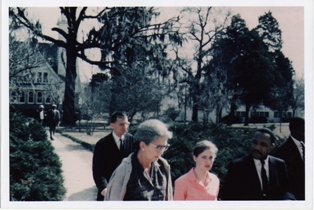
Joan Trumpauer Mulholland w/ Dr. King
Joan Trumpauer Mulholland walking beside
Dr. Martin Luther King, Jr.
An Ordinary Hero: The True Story of Joan Mulholland,
film screening and discussion

 
Wednesday, March 27, 2013, 7:00 pm to 9:30 pm

 
The Artisphere
1101 Wilson Blvd.,
Arlington, VA 22209
 
Joan Trumpauer Mulholland grew up in the segregated South and emerged as an activist who fought fervently for the rights of others. Attacked and beaten during the courageous Freedom Rides of 1961, Joan was imprisoned and hunted but never wavered in her beliefs. An Ordinary Hero is a moving chronicle of Mulholland’s life, containing rare images and footage from the Civil Rights Movement. Following the film will be a panel discussion featuring Mulholland, her son, Loki Mulholland, who is the writer and director of the film, and William Pretzer, Senior Curator of History at the Smithsonian’s National Museum of African American History and Culture (NMAAHC). Co-sponsors of the event are NMAAHC and the Arlington Public Library.


For more information, visit http://nmaahc.si.edu/Events/calendar or call (202) 633-0070. Admission is free and on a first come, first serve basis.


On Art and History: Natasha Trethewey Reads and Discusses Native Guard


Monday, May 6, 2013, 7:00 pm


National Museum of American History, Warner Bros. Theater14th Street and Constitution Avenue, NW
Washington, DC
First floor, enter through Constitution Ave doors
Metro: Smithsonian or Federal Triangle


Natasha Trethewey, appointed the U.S. Poet Laureate in June 2012, will read from her Pulitzer Prize-winning collection of poems titled Native Guard. Trethewey gives an impressive interpretation of the Native Guard, one of the first mostly black regiments to fight in the Union Army. The Native Guard was composed mostly of former slaves who enlisted and were assigned to guard Confederate prisoners of war. According to Trethewey’s poem “Elegy for the Native Guards,” the presence of the African American soldiers has gone unrecognized. She also explores her life from the mid-1960s through the early 1980s, a time of tremendous upheaval in Mississippi. Native Guard provides a thoughtful, long view of a tumultuous century in American History. The Rising Star Fife and Drum Band led by Sharde Thomas of Sardis, Miss., will open and close the program.


Books will be available for sale and signing following the program.
For more information, visit http://go.si.edu/site/R?i=mRoNuGxz3dJPmbecC7PxVA.
Admission is free, but reservations are suggested, call (202) 633-0070.


Help us build Smithsonian's National Museum of African American History and Culture by becoming a Charter Member today!
If you are already a Charter Member, would you consider helping us with another donation today?
dd-enews-bottom-cta-donate.jpg

Friday, February 22, 2013

THE GERMANTOWN PROTEST


Lonnie Bunch, museum director, historian, lecturer, and author, is proud to present A Page from Our American Story, a regular on-line series for Museum supporters. It will showcase individuals and events in the African American experience, placing these stories in the context of a larger story — our American story.


A Page From Our American Story

 
“Pray, what thing in the world can be done worse towards us, than if men should rob or steal us away, and sell us for slaves to strange countries; separating housbands (sic) from their wives and children.” — from The Germantown Protest (against slavery).
 
In 1565, the Spanish colony of St. Augustine, in what is now Florida, became the first permanent European settlement in North America. Among the settlement's population were some of the first enslaved Africans brought to the New World.
 
The first permanent settlement of African slaves in British Colonial North America arrived in Jamestown, Virginia, via a Dutch slave trading ship in 1619. It wasn't long before the American colonies found themselves economically dependent on slave trading and enslaved labor.
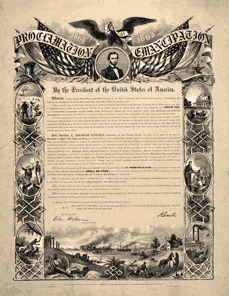

 
Emancipation Proclamation Reproduction
Reproduction of the Emancipation
Proclamation at the National Underground
Railroad Freedom Center in Cincinnati, Ohio.
More than two hundred years later, on January 1, 1863, in the midst of our civil war, Abraham Lincoln's Emancipation Proclamation would free slaves in the rebellious southern states. The Proclamation, along with the voices and actions of individuals such as Frederick Douglass, Sojourner Truth, Harriet Tubman, William Lloyd Garrison, and others, would ultimately lead to the passage of the 13th Amendment two years later, ending slavery in the United States and freeing nearly four million African Americans.

 
Reaching that milestone, however, was a long, painful, and bloody process. One of the earliest recorded actions toward ending slavery was taken by a small group of Quakers in Germantown, Pennsylvania Colony, in 1688.


Before slavery truly became institutionalized in the colonies, some Africans were sometimes treated more like indentured servants who were freed once their service ended or debt had been paid, a practice employed at times by various early Dutch and Spanish explorers and settlers. However, this changed dramatically in 1641 when Massachusetts became the first British mainland colony to legalize slavery. From that time forward, colonial slave laws became more restrictive, further codifying the institution.
 
Not everyone was blind to slavery's immorality. Although slavery played a major role in the economy of colonial Rhode Island, there were some who tried to temper the practice with a 1652 law that placed restrictions on slave owning and prohibited enslavement of any person for more than 10 years. However, the effect was limited. Slave holders simply sold anyone nearing the deadline and took ownership of new slaves, thus continuing the cycle.

 
3b43018r.jpg
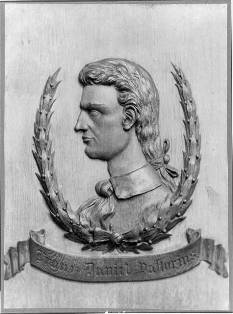
Bas-relief portrait of Francis Daniel Pastorius,
c. 1897. From the Library of Congress.
In 1688, Francis Daniel Pastorius, and three of his fellow Quakers, drafted the first, formal anti-slavery resolution in America. The resolution raised objections to slavery on both moral and practical grounds during a period when Pennsylvania Quakers were nearly unanimous in their acceptance of the practice.

 
The decree is referred to as “The Germantown Protest,” or “1688 Germantown Quaker Petition Against Slavery.” It articulated themes of justice and equality that would be echoed throughout the long, painful period of slavery in America.
 
The authors’ premise was based on the biblical “Golden Rule” — treat others as you wish to be treated. Additionally, the authors recognized that colonial slave treatment mirrored the persecution Quakers had seen in Europe, and, to an extent, in the colonies.

 
"There is a saying, that we should do to all men like as we will be done ourselves; making no difference of what generation, descent, or colour (sic) they are... To bring men hither [to America], or to rob and sell them against their will, we stand against.”
 
Sadly, “The Germantown Protest” did not spark a significant change in the Americas against slavery. Even within Quaker communities the declaration was ignored, at least initially. But a seed had been planted. A belief shared silently by many was given voice.

 
This year marks the 150th anniversary of the Emancipation Proclamation. While it is tempting to view the Proclamation solely through the lens of Civil War events, in order to grasp the full context and importance of Lincoln’s decision, we must examine the issue of slavery in the North American colonies from its beginnings. From the Spanish colony in St. Augustine, to the first Dutch ship sailing into Jamestown, and to the Civil War waged to end it, slavery was a 300-plus year institution in America, leaving scars, fortunes, and repercussions we deal with still today.

 
dd-enews-temp-lonnie-bunch-2.jpg All the best,

Lonnie Bunch
Director


The National Museum of African American History and Culture is the newest member of the Smithsonian Institution's family of extraordinary museums.

The museum will be far more than a collection of objects. The Museum will be a powerful, positive force in the national discussion about race and the important role African Americans have played in the American story — a museum that will make all Americans proud.

Tuesday, December 11, 2012

THE EMANCIPATION PROCLAMATION AND THE MARCH ON WASHINGTON

Newsletter from


NMAAHC -- National Museum of African American History and Culture
Changing America: The Emancipation Proclamation, 1863
and the March on Washington, 1963


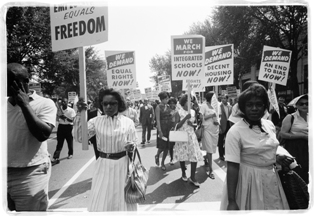
March on Washington, 1963March on Washington participants. Aug. 28, 1963.
Library of Congress
Opens December 14, 2012
NMAAHC Gallery at American History, second floor east
On August 28, 1963, at the March on Washington, Martin Luther King Jr. began his speech by declaring, "Five score years ago, a great American, in whose symbolic shadow we stand, signed the Emancipation Proclamation. This momentous decree came as a great beacon light of hope to millions of Negro slaves who had been seared in the flames of withering injustice. It came as a joyous daybreak to end the long night of captivity ... In a sense we have come to our nation's capital to cash a check."

 
In 2013 the country will commemorate two events that changed the course of the nation — the 1863 Emancipation Proclamation and the 1963 March on Washington. Standing as milestone moments in the grand sweep of American history, these achievements were the culmination of decades of struggles by individuals — both famous and unknown — who believed in the American promise that this nation was dedicated to the proposition that "all men are created equal." Separated by 100 years, they are linked together in a larger story of freedom and the American experience.

 
To commemorate these two pivotal achievements, the Smithsonian’s National Museum of African American History and Culture (NMAAHC) in collaboration with the National Museum of American History (NMAH) will present an exhibition, featuring historic photographs, paintings, new film footage and objects, that explores the historical context of these two crucial events, their accomplishments and limitations, and their impact on the generations that followed.

 
The exhibition will be on view from Dec. 14, 2012 through Sept. 15, 2013 in NMAAHC’s temporary gallery on level two at American History, 14th St NW and Constitution Ave NW. Metro: Smithsonian or Federal Triangle.
For more information, visit www.nmaahc.si.edu.